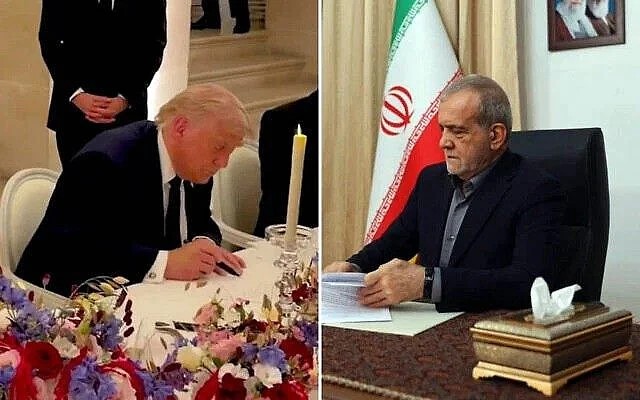
After days of back and forth the signing of the June 2026 Memorandum of Understanding (MoU) between the United States and the Islamic Republic of Iran marks a paradigm shift in global geopolitics. Signed after months of devastating military escalation spanning from 2025 into early 2026, the MoU functions less like a compromise and more like an acknowledgment of a strategic reality: a regional superpower has successfully checked global hegemony. By leveraging its asymmetrical advantages, Iran has effectively secured a narrative of victory over a heavily armed Western coalition, reshaping the security architecture of the Middle East.
A Pyrric MoU
The provisions of the MoU reveal substantial concessions granted by Washington, reflecting Tehran’s strong negotiating position:
Immediate and Permanent Cessation of Hostilities: The MoU mandates an immediate halt to all military actions. For Iran, surviving a direct confrontation with the joint forces of the U.S. and Israel while preserving its governing infrastructure constitutes a major strategic victory.
Comprehensive Sanctions Relief and Economic Waivers: The U.S. Treasury has agreed to issue immediate 60-day waivers lifting sanctions on Iranian crude oil, petrochemicals, and banking transactions. Allowing Tehran to openly sell oil—primarily to China—and inject revenue directly into its central bank serves as an economic lifeline that directly undermines decades of Western “maximum pressure” campaigns.
Release of Frozen Assets: The unfreezing of billions in assets (with reports indicating up to $24 billion to $300 billion in potential postwar reconstruction aid and freed capital) provides a massive financial boost. While U.S. officials like Vice President JD Vance argued these funds should be restricted to humanitarian purchases, Iranian diplomats have firmly asserted absolute sovereignty over how the capital is spent.
The Nuclear Compromise: The U.S. initially demanded the complete, permanent dismantlement of Iran’s nuclear facilities. Instead, the MoU relies on a minimum concession: Iran will temporarily freeze its high-level enrichment and allow IAEA inspectors back to monitor the “down-blending” of its 60% enriched uranium. Tehran has maintained its fundamental right to enrichment, deferring long-term restrictions to future 60-day negotiations.
Regional De-escalation and Proxy Silence: The MoU remains notably quiet on Iran’s ballistic missile program and its regional alignment with groups like Hezbollah. While the document respects Lebanon’s territorial integrity, it does not force Iran to disarm its regional network, thereby preserving its forward defense doctrine.
The Strategic Card: The Strait of Hormuz
The undisputed center of gravity throughout this conflict has been the Strait of Hormuz. By threatening and effectively closing this choke point—through which nearly one-fifth of the world’s petroleum passes—Iran triggered a global energy crisis that forced the Trump administration to the negotiating table.
Under the MoU, Iran agreed to restore the free flow of shipping without tolls, but crucially, only for a renewable 60-day window overseen by an Iranian-Omani framework. By ensuring that the reopening is subject to “Iranian arrangements,” Tehran retains its ultimate trump card. The message to the global economy is clear: any resumption of Western or Israeli aggression will immediately result in the closure of the world’s most critical energy artery. Iran now possesses the leverage to dictate terms, using international markets as a shield against further military intervention.
Israel’s Strategic Challenge
The U.S.-Iran MoU presents a significant strategic challenge for Jerusalem. For years, Israeli security doctrine relied on the assumption that the United States would provide a permanent military umbrella to neutralize the Iranian nuclear threat. The current reality reveals a different outcome: Washington has chosen a diplomatic exit to stabilize global markets, leaving Israel to navigate a newly emboldened adversary.
Without unconditional U.S. military intervention, Israel faces a complex strategic landscape. The MoU guarantees a ceasefire that extends to the Lebanon front, yet Israel’s political leadership has rejected demands for an immediate, total withdrawal from contested border zones. However, fighting a protracted, multi-front war against Iran’s asymmetric network without guaranteed American replenishment is structurally unsustainable. Israel now faces a difficult choice: accept a fragile, Iranian-influenced peace that leaves its main regional rival intact, or risk international isolation by launching unilateral actions that could disrupt the newly established U.S.-backed diplomatic framework.
The New Architectural Blueprint of the Middle East
The future of the Middle East will no longer be defined by undisputed Western dominance. The mediation of this MoU—brokered extensively by regional actors like Pakistan, Qatar, Oman, and Saudi Arabia—signals that regional capitals are taking charge of their own security corridors.
We are entering a multipolar era in West Asia. Supported economically by China and strategically reinforced by partnerships with Russia, Iran has successfully transitioned from an isolated state into an influential regional manager. Meanwhile, Gulf states like Saudi Arabia and the UAE are pivoting toward pragmatism, choosing diplomatic coexistence with Tehran over catastrophic regional warfare. The U.S. military footprint will likely contract as Washington looks to reduce its commitments in the region.
Ultimately, the MoU demonstrates that while conventional military force can cause significant destruction, it cannot easily reshape political realities against a resilient, strategically positioned adversary.