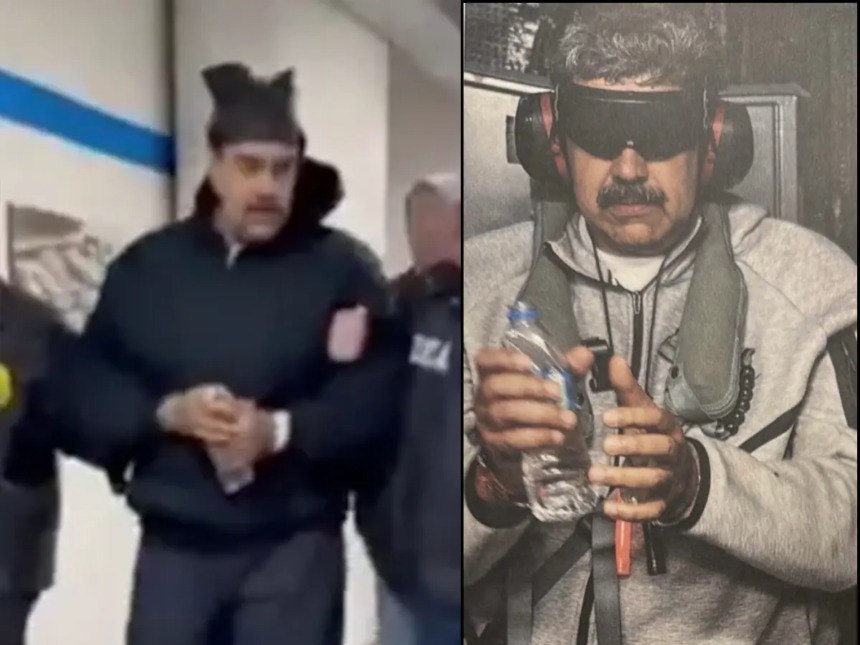
In a major development in Operation Absolute Resolve, Venezuela’s President Nicolas Maduro along with his wife was captured in the midst of the night of Jan 3, 2026 by US Forces in an extremely sophisticated, with clinical precision and taken to New York. Later in a press conference in Mar a Lago Trump confirmed the successful Operation and said that the US will rule Venezuela till the transfer of power next.
Trump claimed the U.S. would “run Venezuela” temporarily until a “safe, proper, and judicious transition” of power could be established. He defended the decision as necessary to combat narcotics trafficking, corruption, and autocracy — framing Maduro’s regime as illegitimate and dangerous. Trump also signaled that major U.S. oil companies would be brought in to rehabilitate Venezuela’s failing energy infrastructure and exploit its vast crude reserves. The speech was unapologetic, striking a starkly assertive tone.
The U.S. government has long accused Maduro of presiding over a “narco-state” responsible for facilitating drug trafficking into the United States. Maduro and Flores are now charged in U.S. federal court with narco-terrorism and drug conspiracy offenses — charges central to the legal rationale for his capture.
The intervention also fits within a broader U.S. strategy aimed at rolling back governments viewed as hostile and ideologically aligned with strategic rivals. In recent years, tensions between Washington and Caracas intensified amid Venezuelan elections widely denounced as corrupt, crushing economic decline, and an increasing Venezuelan military partnership with Russia, China, and Iran
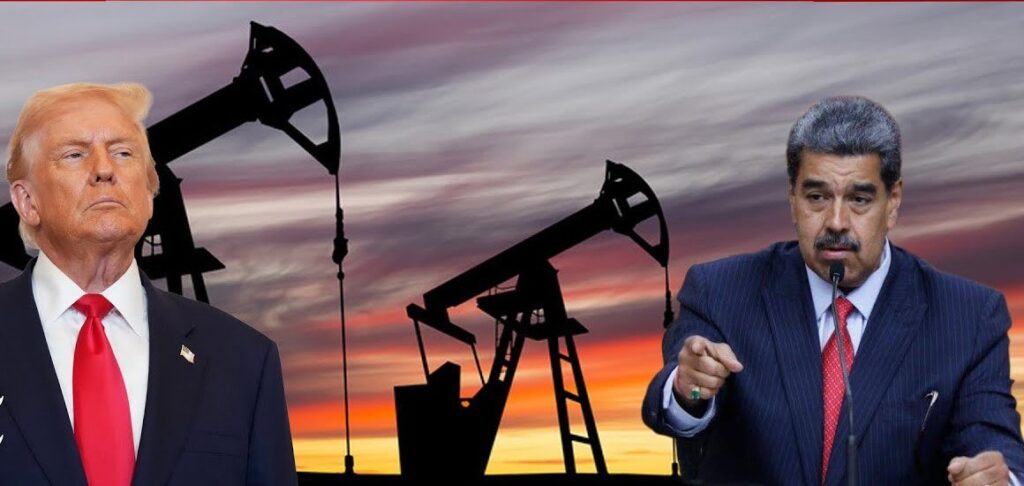
The most consequential underlying motive — hinted at explicitly by Trump — is Venezuela’s energy wealth. With the largest proven oil reserves in the world, Venezuela represents a potentially transformative prize in the global energy market. The U.S. was already deeply concerned about foreign — especially Chinese and Russian — access to these resources. Trump’s statements about U.S. oil companies rebuilding Venezuela’s energy sector make clear that control of energy assets and revenue streams is central to American strategic thinking in the region.
Being the first one to speak up was Russia who condemned the U.S. military action as a blatant act of aggression and violation of Venezuelan sovereignty, urging all parties to seek de-escalation and dialogue. Moscow reaffirmed support for Venezuela’s right to self-determination.
China issued a strong denunciation of the strike, calling it a violation of international law and a threat to regional security and criticized the assault on a sovereign government. Chinese analysts suggest the episode will push Beijing to deepen strategic ties with Latin American nations in opposition to U.S. unilateralism.
Brazil, Cuba & Chile have called the operation an act of state terrorism and urged peaceful political solutions. The United Nations Secretary-General expressed deep alarm over what he described as a dangerous escalation that could destabilize the region and violate international law. Some European nations response has been lukewarm. They have called for restraint and dialogue, stressing respect for sovereignty and legal norms
Under Maduro, Venezuela had increasingly relied on strategic partnerships with Russia, China, and Iran — all seeking to break U.S. dominance in global geopolitics and secure access to energy resources and military cooperation.
Russia supplied Venezuela with military hardware, economic support, and a diplomatic shield at international forums. China has been a major purchaser of Venezuelan crude and provider of large loans backed by oil shipments. Iran similarly provided economic and logistical cooperation, including in energy and technology. All three loudly denounced the U.S. intervention as an aggressive violation — further complicating their broader strategic competition with the United States.
With the U.S. effectively controlling Venezuela — at least temporarily — the implications for global energy are vast:
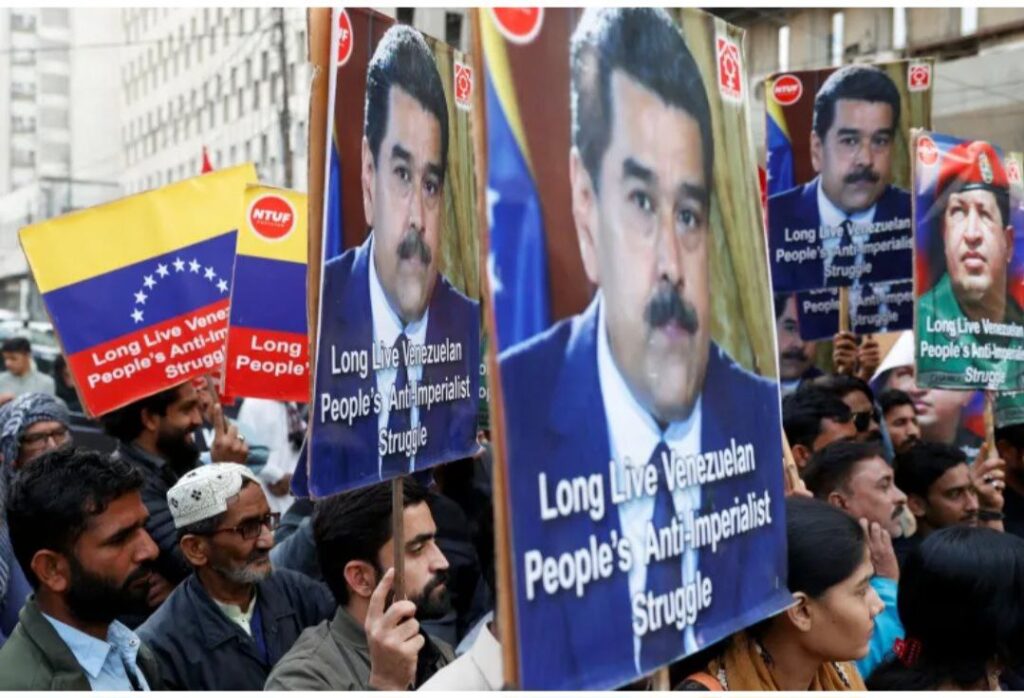
The immediate effect will likely be market disruption. Venezuela’s oil production has been crippled by decades of mismanagement and sanctions. A U.S. takeover could result in firstly Rapid integration of Venezuelan crude into global markets under U.S. energy firms, potentially lowering prices. It is a strategic reorientation away from Chinese and Russian access to Venezuelan oil.
Control over Venezuela’s reserves would significantly bolster U.S. influence over global oil markets, giving Washington leverage over OPEC+ dynamics and global supply flows. Countries previously reliant on Venezuelan oil under existing contracts would need to renegotiate. In the short term, this may suppress oil prices, but geopolitical tensions could counterbalance that effect.
For Long-Term Investment & Reconstruction U.S. oil companies could invest billions into revitalizing Venezuela’s aging infrastructure. If successful, Venezuela could regain — and even exceed — its former production capacities, altering energy geopolitics by expanding non-OPEC supply.
The U.S. strike on Venezuela and capture of President Maduro is a historic geopolitical rupture with wide-ranging consequences for international law, regional stability, great-power competition, and the global energy economy. Trump’s decision to run Venezuela and harness its oil wealth is poised to reshape Latin American geopolitics and energy markets for years to come — even as global condemnation and legal challenges mount.