It was February 28, 2026. The flight from Delhi to Dubai began like any other routine journey across the Arabian skies. Passengers boarded the Emirates aircraft with the usual mix of holiday excitement, business urgency and quiet anticipation. Few among us imagined that by the time we landed, the region would be staring at the possibility of a full-blown war.
A Longer Route Into a Tense Region
The Emirates aircraft took off at 10:15 a.m., and the journey began like any other international flight out of Delhi.
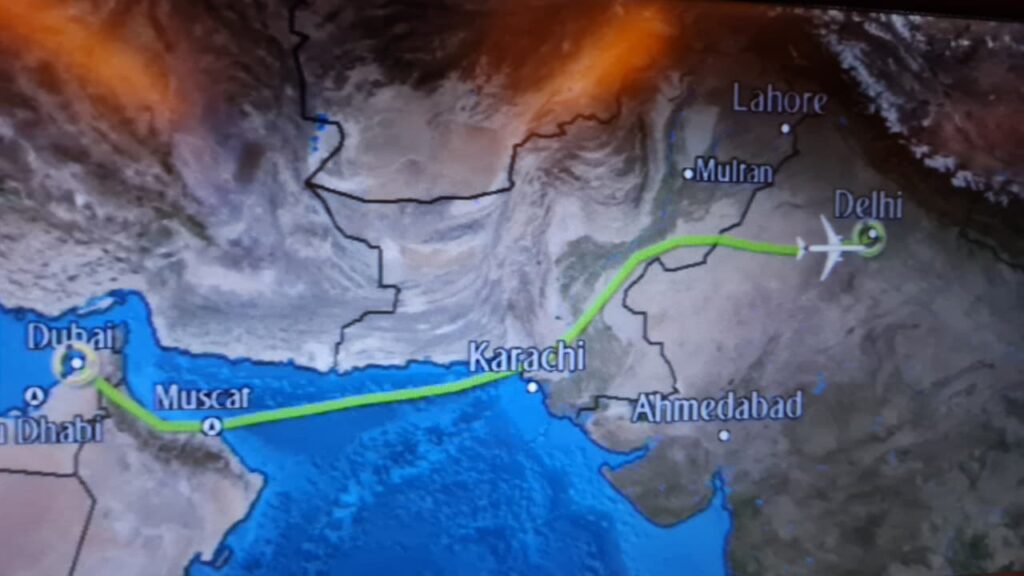
While the aircraft settled into its cruise altitude, the journey carried a reminder of how #geopolitics quietly shapes travel in this region when our flight took a longer detour as Pakistan has closed its airspace for India and vice versa. So instead of flying straight west, the aircraft curved southwest from Delhi toward Jaipur and Ahmadabad before crossing the vast blue expanse of the Arabian Sea toward the Gulf.
While most passengers switched their screens to movies or web series, I remained glued to the route map.
At around noon, that quiet curiosity suddenly turned into alertness.
Midway, Breaking news alerts flashed across the in-flight screens: Iran had been attacked by joint US-Israel forces.
Almost instinctively, I switched my screen from the flight map to live coverage on CNN and flipping between others. The newsrooms were already in full crisis mode. I watched analysts debate possible retaliation from Iran while anchors spoke of a rapidly escalating regional crisis.
The Plane That Would Not Land
Inside the aircraft, however, the mood was oddly calm. Some continued watching films or sleeping while few seemed aware that the region we were flying into had suddenly become the centre of a geopolitical storm.
By around 12:30 p.m., our aircraft had crossed over Gulf of Oman and was approaching Dubai. According to the flight map, we were less than an hour away from landing when I observed something unusual on the inflight screen map.
The aircraft icon on the screen suddenly took a U turn from just short of Dubai and began heading backwards towards Muscat. It made me wonder why.
On reaching Muscat skies it took a U turn towards Dubai again. The to and fro repeated itself again and again- three times at least.
Finally, the pilot spoke.
“Ladies and gentlemen, due to congestion Dubai airport has been temporarily closed. We will soon receive further instructions.”
The announcement was brief and calm, but the timing was unmistakable. A war had just begun in the region.
For nearly twenty minutes the aircraft circled near and around Dubai airspace.
Then came the announcement everyone had their fingers crossed for.
“We have received clearance to land at Dubai airport.”
A spontaneous wave of applause swept through the cabin.
At around 2 p.m., late by almost an hour we finally touched down at Dubai International Airport.
A City That Looked Calm — At First
Inside the airport, the atmosphere felt tense and uncertain. The terminal was crowded with travelers moving in opposite directions—some rushing to leave the region while others who lived in Dubai were trying to get back home.
Airport announcements repeatedly advised passengers not to crowd the airport, as flight schedules were already beginning to unravel. We waded our way out somehow.
Stepping outside the airport felt surreal. I was in Dubai.
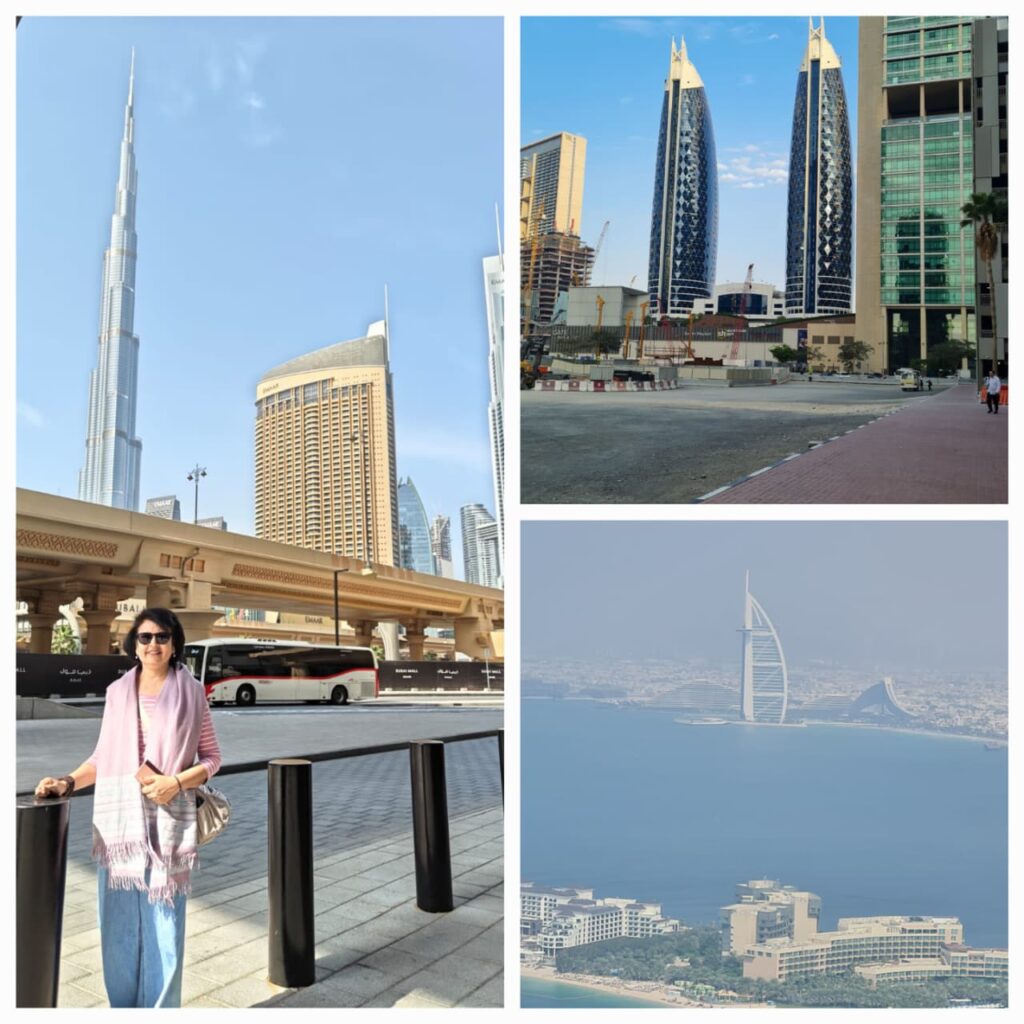
The drive to the hotel revealed the familiar, futuristic skyline—gleaming towers, glistening skyscrapers, immaculate highways and the commanding silhouette of the Burj Khalifa rising above everything else.
At that moment, it was hard to believe that a war had just erupted in the region.
Welcomed by the Hotel staff we were reassured that things were safe. The United Arab Emirates, they said confidently, had strong defenses and experience in handling crisis.
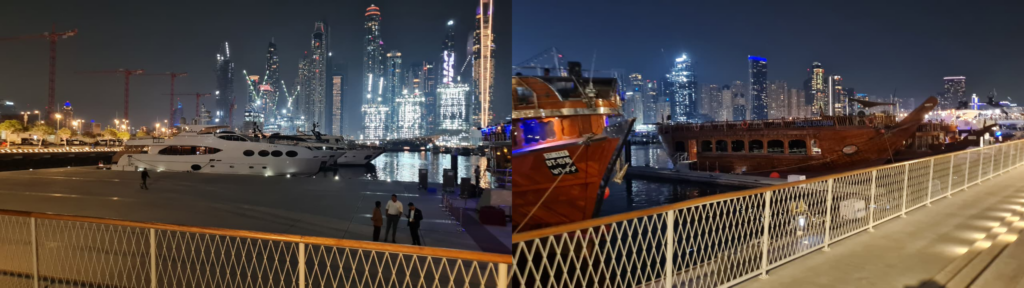
Encouraged by that reassurance, I stepped out later that day. But the sense of unease was impossible to ignore. My visit to the Dubai Marina Dhow Cruise #dhowcruise late that evening was a reflection of what I was to experience the next few days. With very few people, the Dhow, we were informed, could cancel its customary round of the creek in view of security risks. Realities were slowly sinking in.
The Night the Alerts Came
That night the reality of war arrived with sound. Within minutes, emergency alerts flashed on mobile phones across UAE, including mine, advising residents and visitors to stay indoors due to possible missile or drone threats.
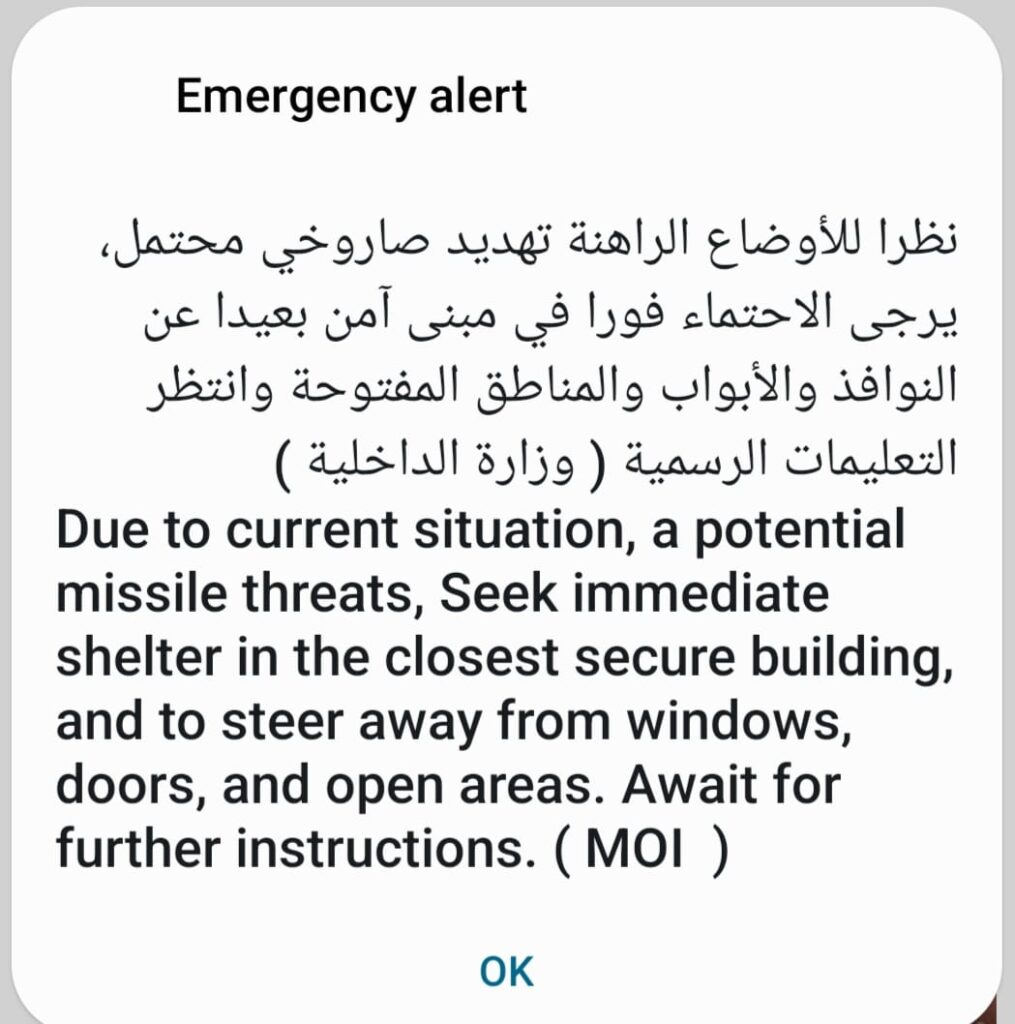
It followed with distant explosion sounds that echoed faintly across parts of the city. Authorities later announced that “168 drones had been intercepted and destroyed” by the country’s air-defense systems.
The Quietest Dubai Anyone Had Seen
The next morning, Dubai looked like a different city.
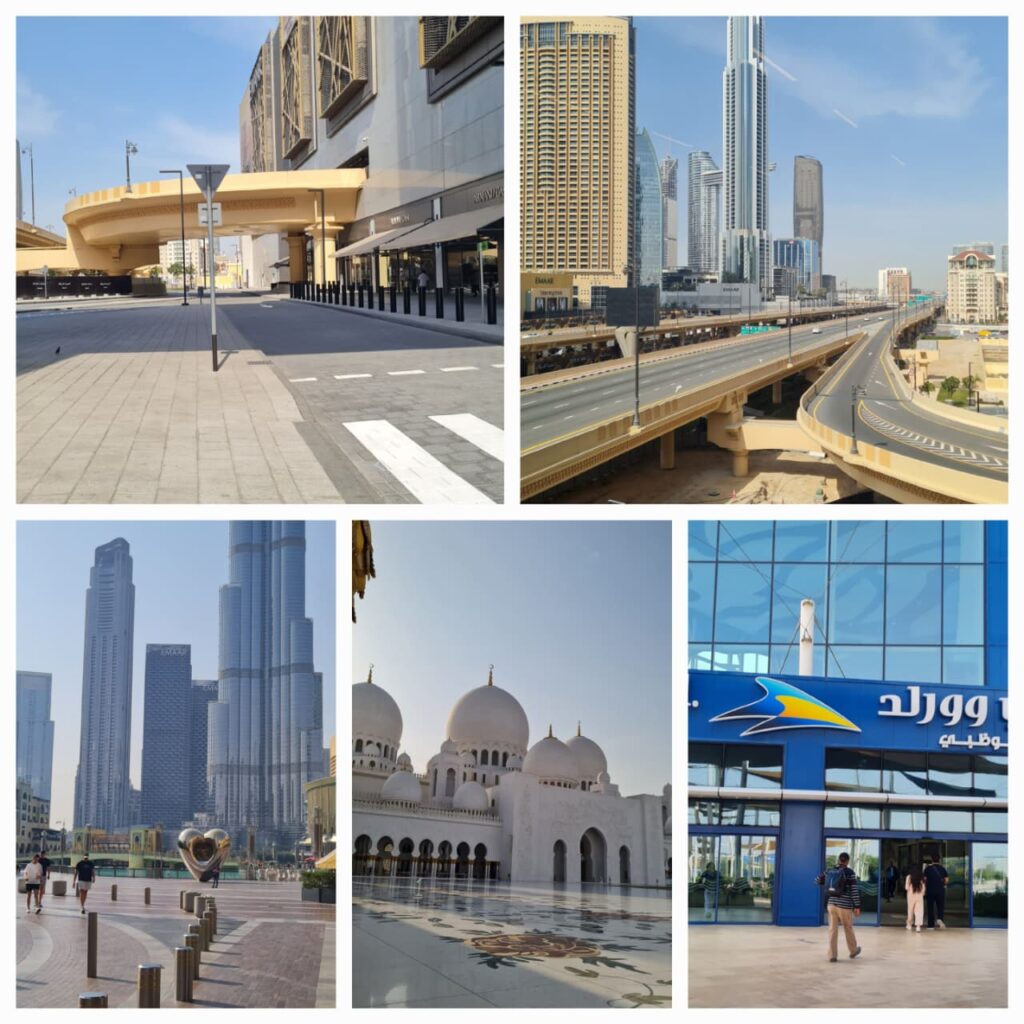
Highways that normally carry endless traffic were almost empty. Downtown Dubai where we were putting up is usually a place that has maddening traffic on any normal day, was missing today.
Markets and malls were open but quiet and deserted. Popular places like Dubai Mall and Dubai Marina had barely any visitors. Main tourist attractions like Marina Creek, Dubai Fountain, the Sheikh Zayed Grand mosque, Desert Safari, Yas Island and Sea World, The Atlantis and Palm Jumeriah were open for tourists, with very few actually visiting them.
A Lonely Visit to the Tallest Tower
Yet curiosity kept drawing me out to observe the city. This time Burj Khalifa was different. The tower which usually welcomes around 6,000 to 7,000 visitors daily was almost empty and we appeared to be sole visitors.
Before entering the elevator nervously, I asked the escort if it was safe to go to the top. His reply was disarmingly honest.
“Maybe not.”
Still, I decided to take a chance. The elevator whisked us to the 124th floor—about 452 meters above ground. From that height, Dubai’s skyline stretched endlessly across the desert and the coast.
But the silence was striking.
Rumours, Drones and Cancelled Flights
Rumours began circulating online—including false claims that Burj Khalifa had been attacked. Authorities quickly dismissed the reports. UAE government was constantly sending alerts day and night to one and all to observe caution and safety in the likelihood of a missile attack.
On March 5 Dubai airport was the target of a drone strike briefly halting flights before operations resumed a few hours later.
For travelers like me, uncertainty began turning into anxiety. My return flight to Delhi by Emirates that was scheduled for March 7 got cancelled. Cancelled flights like Emirates were refunding passengers their money. Even Air India. Uneasiness had taken over me.
Anxiety Far From Home
In a region where a conflict had already begun and escalation seemed possible, the uncertainty of when I would return home weighed heavily.
I began contacting anyone and everyone I could think of in Dubai. Having seen updates from the #EmbassyofIndia in #AbuDhabi and the #ConsulateGeneralofIndia in Dubai on Twitter—sharing toll-free numbers, WhatsApp contacts, and email IDs—I tried reaching out through all available channels and tweeted at them as well. Next I hired a taxi and visited the #cgioffice in Dubai to seek assistance and updates, as a journalist. Many Indians who had come to seek assistance and guidance at the Consulate entrance were seen leaving with unsure answers. I would guess they must had a safe return though.
Friends back in Delhi reached out constantly through WhatsApp messages. Ironically, WhatsApp calls do not function in Dubai, so every conversation happened through text messages.
Some good friends shared contact numbers of people they knew in Dubai who could help in case of emergency.
Back home, the concern was intense.
Family members repeatedly checked whether I was safe. Well wishers sent messages throughout the day. Their worry reflected the reality of being stuck in a region where tensions had suddenly escalated and where leaving safely felt uncertain.
A City Trying to Reassure the World
Meanwhile authorities in Dubai tried to reassure travelers.
The Dubai Department of Economy and Tourism instructed hotels ‘not to evict guests who were unable to leave due to flight cancellations’. In neighboring Abu Dhabi, authorities announced that hotel overstay costs for stranded guests would be covered by the government. Dubai ruler Sheikh Mohammed bin Rashid Al Maktoum reportedly instructed hotels across the city to support guests during the current regional tensions. Hotels were asked not to charge visitors for extended stays and to help with food, ensuring travelers are not left worried during these uncertain times. On social media UAE President Sheikh Mohamed bin Zayed Al Nahyan similarly emphasized that residents and guests are considered family, reinforcing that the country acts as a protector for everyone on its land.
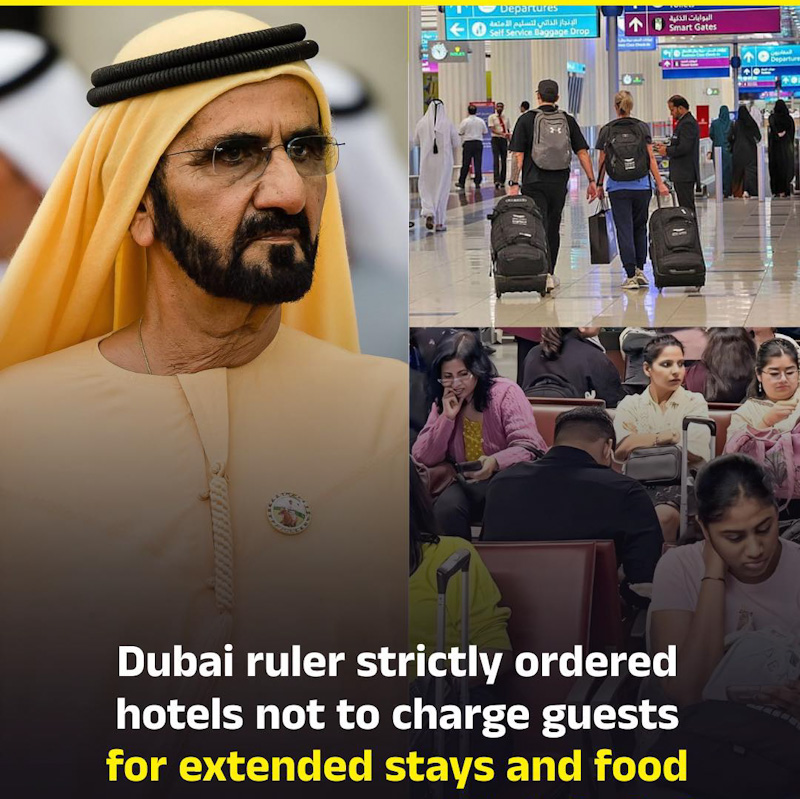
Hotels quickly filled up with stranded travelers. Lobbies became places where people exchanged rumours, travel advice and flight updates.
Tourist attractions like Palm Jumeirah, Atlantis The Palm, Yas Island and Sea World Abu Dhabi remained open but almost empty.
Taxi drivers and restaurant owners were among the worst affected. With tourists gone, many drivers spoke about losing their income overnight. Restaurants and cafés sat quiet even though the holy month of Ramadan is a time when business usually thrives. Shopkeepers in traditional market places of Old Souk and Al Seef selling wares like souvenirs, textile, perfumes, spices, etc sat idle waiting for tourists. The coming months were going to be lean season too because of the heat.
Leaving a City That Refused to Panic
Finally, after days of uncertainty, by day 7 flights slowly began resuming. Indian carrier Air India claimed that it carried about 52,000 Indians back home. Emirates online services were discontinued because of rush so a visit to Emirates office at its Deira Centre had to be visited to rebook our ticket. As Air India had given us an earliest flight back for March 11, big sum of money were spent on crisis booking. When booking of 7 days crossed in Millennium Plaza Downtown we shifted to another hotel for an additional amount for extended days.
It was March 9, I was finally on a flight back to Delhi amidst the sounds of some incoming drone or missile being intercepted somewhere.
As the aircraft lifted off and Dubai’s skyline slowly disappeared below the clouds, I reflected on the strange and intense week I had just experienced.
Despite the tension, the uncertainty and the fear that accompanies any conflict, one truth stood out clearly.
Dubai remains an extraordinary city.
A city built on ambition, resilience and hospitality it is a place where people from across the world arrive with dreams, business ideas, holiday plans or simply curiosity—and somehow feel welcomed.
Even during those uneasy days, the care and efficiency of the administration and the determination of the city to keep functioning was impressionable.
Dubai is not just about towering buildings like the Burj Khalifa, glittering malls or luxurious hotels. It is about the spirit of a global crossroads—a city that embraces people from everywhere.
And as I returned to Delhi, one thought stayed with me. I would love to return to Dubai again.
Next time, I hope it will be in happier times—when the skies over the region are calm again, when the shadow of war has lifted, and when the city can once more be experienced the way it truly deserves to be.
Post script: *As for latest update…. Many 4 and 5-star hotels are offering steep discounts, with some listings showing rates for luxury rooms reduced by 50% or more compared to normal, as reported by The Economic Times due to 20% drop in hotel occupancy. Take a chance…….
*The return Emirates flight from Dubai did take the Pakistan route back to New Delhi. War time allowances……..I guess